
There's a bodega my mind goes back to whenever I think about how systems handle pressure. The one my parents ran when I was a kid. One counter. Different customers with different needs and different perceptions of how long they'd been waiting. Some wanted a sandwich. Some wanted coffee. Some just wanted to know if you had what they came for. And there was one person behind the counter trying to do all of it at once.
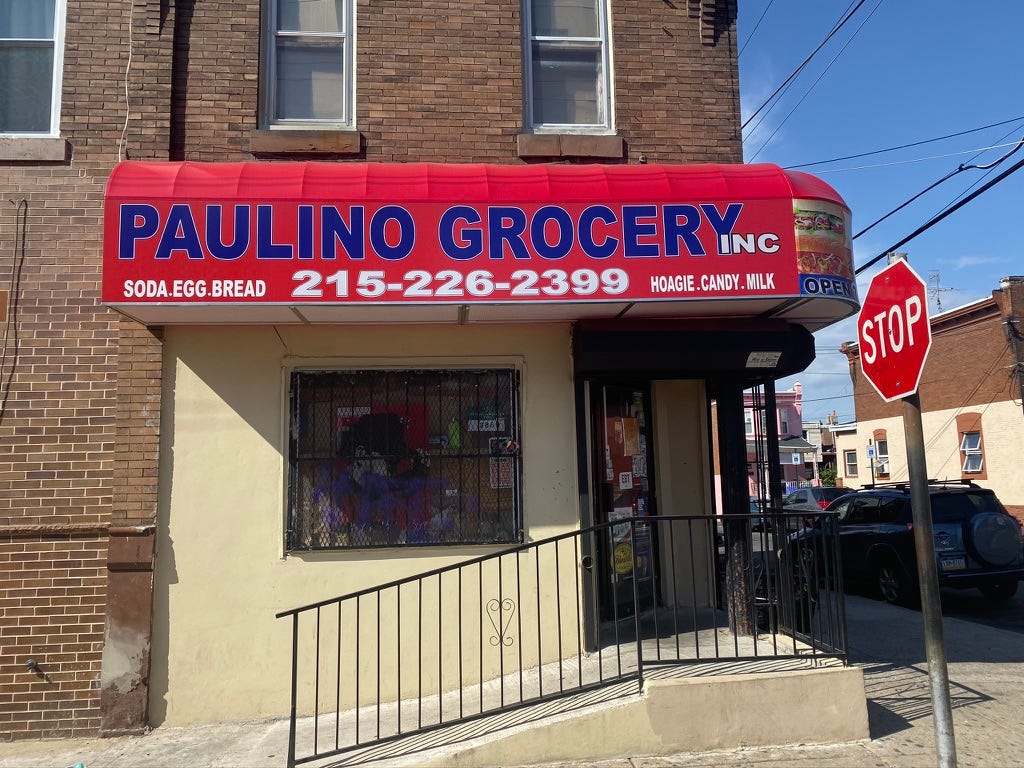
And every bodega has a cat. It doesn’t take orders. It doesn’t work the register. But make no mistake, this cat runs the place. It knows when the line is backing up, when the rhythm behind the counter is off, when something in the operation needs to change. The workers work. The cat manages.
That image came back to me on March 26th, in a UAT meeting with my team: Rahmi, Mita, and Mika. I was standing in front of them explaining why Ideate's AI analysis pipeline was slow, and I reached for the only analogy that felt honest.
“It’s like a bodega line. One worker, one line. Everyone’s waiting.”
It landed. They got it. So I kept going.
“Batches of 50.”
I said it the way you say something when you’re sure. The kind of sure that comes from having built the thing yourself months ago and trusting your memory more than you should. My team started designing solutions around that number. Around a number I made up on the spot.
I had an inkling something was off before I even left the room. It had been a while since I'd looked at those numbers directly, and intuition has a way of tapping you on the shoulder right after your mouth finishes making promises your memory can't keep. That night, I opened the codebase and audited every technical claim I'd made in the meeting.
Eight claims. Four were wrong.
The batches weren’t 50, they were 5 to 15, adaptive by hour.
The math I’d implied didn’t work: six batches of 50 is 300, not the 8,000 images I’d referenced.
I’d said trait variation depended on the source, but it was the same pipeline for everything -- the variation came from queue timing.
I’d said the organize action triggers analysis, but analysis actually queues on board-add, not organize.
The other four were right. Sage does use Gemini. The shared quota is a bottleneck. The single queue is real. Priority queueing exists. But half right and half confident-and-wrong is a dangerous combination when you’re the person in the room everyone trusts to know. Four out of eight isn’t terrible on paper, but if every other thing you say with conviction turns out to be wrong, you stop selling the destination. People start wondering if you actually know where you’re going.
I felt the weight of my words land heavier than they had in the meeting. I'm the one who's supposed to be the expert in the room. I put that responsibility on myself, and I'd let my team down by being sure about things I wasn't sure about.

But here’s the thing about getting it wrong: the meeting wasn’t a failure. It was a flashlight. During the conversation, I’d said something almost offhand, “Can we think of something else for Sage... maybe pick up something to pick up Gemini’s slack.” My instinct was right before I could articulate the architecture. The bodega analogy was more accurate than I realized. I just hadn’t followed it deep enough.
That night I wrote Linear ticket DEV-1645, and the real problem came into focus:
Everything in Ideate runs through one API key: Sage chat, image analysis, creative briefs, embeddings. One quota pool. If Sage usage spikes, image analysis starves. If a bulk import floods the queue, Sage slows down. No workload isolation. I called it shared-fate failure. Everything lives or dies together. That’s the REAL bodega problem not just one worker, but one kitchen making sandwiches, salads, and coffee all from the same counter with the SAME pair of hands and they are tired.
I didn't tell the team I'd gotten half of it wrong. What I did was open the codebase and start building. That night I stopped trying to be the worker behind the counter and stepped into the role I was actually supposed to play —the bodega cat. Not making the sandwiches. Managing the operation. Figuring out which workers needed their own stations, which orders needed priority, and why the whole place was grinding to a halt. The meeting had opened a door —not to embarrassment, but to investigation. It helped me see what I could do differently, and that mattered more than issuing corrections on a Slack thread.
Forty-eight hours later, the fix was shipped. Not a patch. A redesign.
I gave Sage its own counter. Separated the chatbot onto Claude Haiku so it would stop sharing the counter with image analysis. The key decision there was Claude over GPT-4o — Sage gives creative feedback to designers, and nuance matters more than cost when you’re talking to people about their work.
I hired more workers. Multi-provider AI for content analysis, so the bodega doesn’t depend on one person calling out sick.
I built priority lanes. Three of them: immediate, for when a user is staring at a spinner waiting on five images; soon, for when someone just added to a board and will interact within minutes; and background, for bulk imports of 500 items that can afford to wait. A designer triggering Adaptive Organize no longer waits behind a feed scrape.
Each lane got its own worker pool with independent concurrency limits. Background bulk work literally cannot starve user-facing requests. That’s not a hope, it’s an architectural guarantee.
I built an external kitchen. When the in-house workers are slammed, overflow routes to an outside service, with circuit breakers so that if the outside kitchen goes down, orders come back automatically. Think of it like a bodega that has a catering partner on speed dial, you don’t shut down the counter just because the lunch rush hit harder than expected instead just call our catering partner to come through with more firepower.
I stopped re-making repeat orders. Multi-tier caching across four levels. If someone already ordered this exact sandwich, don’t make it again. If someone ordered something close enough, don’t start from scratch. That alone cut Gemini API costs by 25 to 35%.
And then I stress tested it. 538 items. Multi-tick drain simulation. Zero invariant violations. I didn’t just fix the problem, I proved it was fixed.
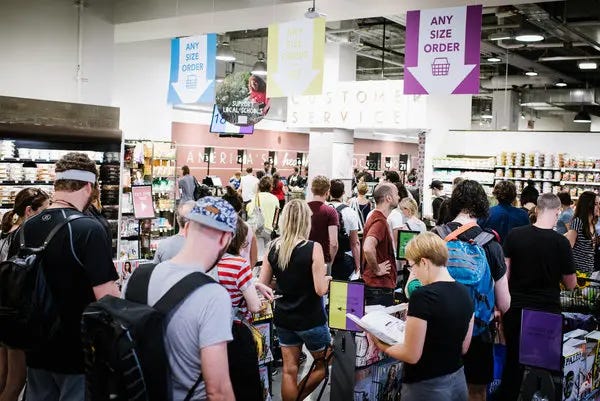
The bodega that had one worker now has multiple workers, three priority lanes, an overflow kitchen, a memory for repeat orders, and a stress test that proves it holds under pressure.
There’s a phrase I come back to when I catch myself not knowing something I thought I knew: pull back to shoot forward. It’s not always about having the answer in the room. It’s about what you do when you leave the room and realize you didn’t.
Would you rather learn with everyone else, or would you rather learn alone? I find that leading with curiosity — real curiosity, not the performed kind — keeps you from wasting resources in the wrong places. The meeting wasn’t where the work happened. The meeting was where the work revealed itself.
If you said the wrong number in a meeting this week, go check. Open the codebase. Read the logs. Audit your own claims with the same rigor you’d bring to someone else’s code review. The fix isn’t in the apology. It’s in the commit history.
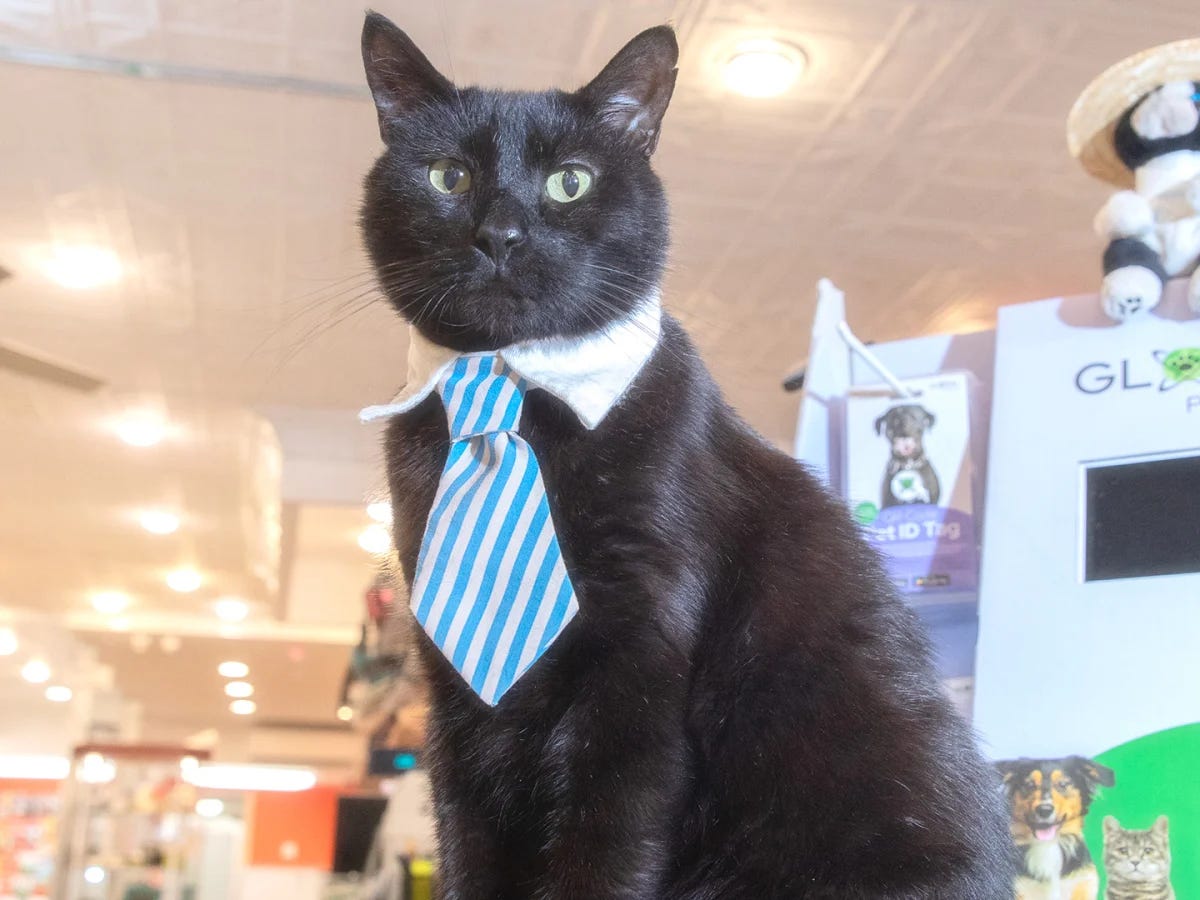
The bodega’s still open. It just runs different now. And the cat’s still running it.